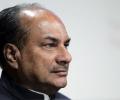
A fresh probe into the Pathribal encounter case is not ruled out in view of the major controversy that has erupted after the Army gave a clean chit to its personnel in the infamous incident which took place in Kashmir in 2000.

Army Chief Gen Bikram Singh was on Monday suddenly called in by Defence Minister A K Antony to brief him about the ceasefire violations by Pakistan on the Line of Control, days after the prime minister voiced concern over the handling of Keran operations.

Six months after coming to power, the National Democratic Alliance government on Monday named National Security Adviser Ajit Doval as its special representative on boundary talks with China, paving the way for the dialogue to resume at this level.

India and the United States are destined to be partners at the world stage due to their shared common values and outlooks on a wide range of issues, the Pentagon has said as US Deputy Secretary of Defence Ashton Carter concluded his highly successful trip to New Delhi.
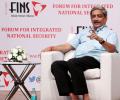
Former NSA Shivshankar Menon said the defence minister did not have a right to voice his personal opinion on nuclear policy in public, particularly when that opinion contradicted the country's official policy.

They alleged that the Uttar Pradesh Prohibition of Unlawful Conversion of Religion Ordinance was being used to "victimise especially those Indian men who are Muslim and women who dare to exercise their freedom of choice".
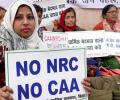
Shivshankar Menon said the government's amendment to the Citizenship Act was a "self-inflicted goal".

The central government should provide for free vaccination to all Indian citizens and greatly ramp up RT-PCR testing in both rural and urban areas, a group of former civil servants said on Thursday in an open letter to Prime Minister Narendra Modi.

In a strong retaliation, India on Tuesday initiated a slew of steps to strip US diplomats and their families of privileges including withdrawing all airport passes and stopping import clearances for the US embassy, terming as "barbaric" the arrest and strip searching of India's Deputy Consul General in New York Devyani Khobragade.
'You can see that in Chinese behaviour in the Yellow Sea, you can see it in their behaviour towards Taiwan, you can see it in their behaviour towards Hong Kong, you can see it on our border as well.'

China on Tuesday said border talks with India have yielded "initial results", enabling the two neighbours to properly handle their differences over the vexed boundary issue and maintain peace along the frontier.
About 3,500 jurists, academics, actors, artistes, writers and people from other walks of life called the registration of the FIR against The Wire's founding editor an attack on press freedom.
The external affairs minister, a JNU alumnus, condemned the attack on the university campus. He said it's completely against the culture and tradition of the university.

India and China decided to seek a fair and rational solution to their border dispute on Saturday as they focused on the proposed border defence cooperation agreement to avert incursions like the one witnessed in Leh region last month.
'This Chinese behaviour we have not seen for a very long time.' 'This sort of build up on the border, this pattern in Chinese behaviour, and especially the aggression and brutality with which our people were attacked on the 15th of June, this is not something we have seen before.'
'We should not worry too much about Indian capabilities, both military and otherwise.'
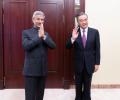
'It is advisable for Indian interlocutors to follow the Chinese tactic of repeating the Indian position, both for the record and to test the Chinese negotiator's resolve and intentions.' A riveting excerpt from former foreign secretary Vijay Gokhale's The Long Game: How the Chinese Negotiate With India.

'We have a common way of looking at the world, a common way of thinking, and a common set of values that predispose us to be partners. And our interests overlap greatly,' Dr Ashton B Carter, America's next defence secretary, told Aziz Haniffa/Rediff.com in an exclusive interview.
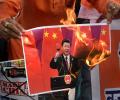
'And this mirror imaging is the most dangerous thing because it leads to tremendous misunderstandings.'

Could Mumbai have been saved from terror on November 26, 2008? Perhaps, had the intelligence agencies of India, United States and Britain worked together.
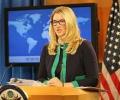
The United States has ruled out acceding to either of the two Indian demands --withdrawal of charges against its diplomat Devyani Khobragade, and an apology for alleged mistreatment, after her arrest in New York last week.

'If at all,' says Suhasini Haidar, Foreign Affairs Editor, CNN-IBN, 'Devyani Khobragade is to avoid facing a full trial, the process of that negotiation must start immediately, for which the current acrimonious atmosphere must be improved. It is no more than the US was willing to do for Raymond Davis; the Italian government for its sailors; and India for Captain Sunil James and Vijayan in Togo. Devyani Khobragade is not accused of charges anywhere as serious they were, and whether Preet Bharara's office recognises it or not, she is a diplomat who represents a proud country that has taken the insult to her as a personal insult to the country.'
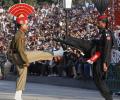
'Pakistan's capacity to carry a normal relationship with India doesn't exist.' 'The relationship with Pakistan is less important than several others.'

Claude Arpi's fascinating account of the Dalai Lama's arrival in Tawang in March 1959.
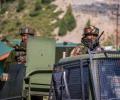
'Why has the peace been kept?' 'Basically because there is a balance.' 'Maybe they think that balance has changed.' 'People can make mistakes. People can miscalculate.' 'If that is the cause, then I think what we have done, matching their build-up, etc, it is giving a good account of ourselves in the face-offs.'

A sensational interview on India-China ties, with the man most qualified to answer.
Claude Arpi gives a fascinating firsthand account of the Dalai Lama's arrival in Tawang in March 1959 and explains why he will once again receive a grand welcome, whether Beijing likes it or not.
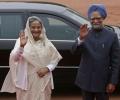
The compulsions of domestic politics notwithstanding, India and Bangladesh script a new story in bilateral relations, say Nayanima Basu and Aditi Phadnis

'If, as appears to be the case, India is on way to 'mending fences' with China, and China is equally desirous to 'reset' the relationship, this could be a self-reflexive moment in India's positioning vis-a-vis not just the Dalai Lama, but also the Tibetan issue and China as a whole,' points out China expert Alka Acharya.

'It was almost as though there was widespread relief that the defence bureaucracy, and the minister, could find someone willing to shoulder the blame for everything that had gone wrong with the services under Antony's charge -- the poor preparedness of the forces, slow acquisitions caused by indecision, cancellation of contracts and whimsical blacklisting of defence contractors over the tiniest suspicion that they may have paid speed money or kickbacks.'
 © 2026 Rediff.com - Advertise with us - Disclaimer - Privacy Policy - Sitemap - Feedback - About us - Terms of use - Grievances